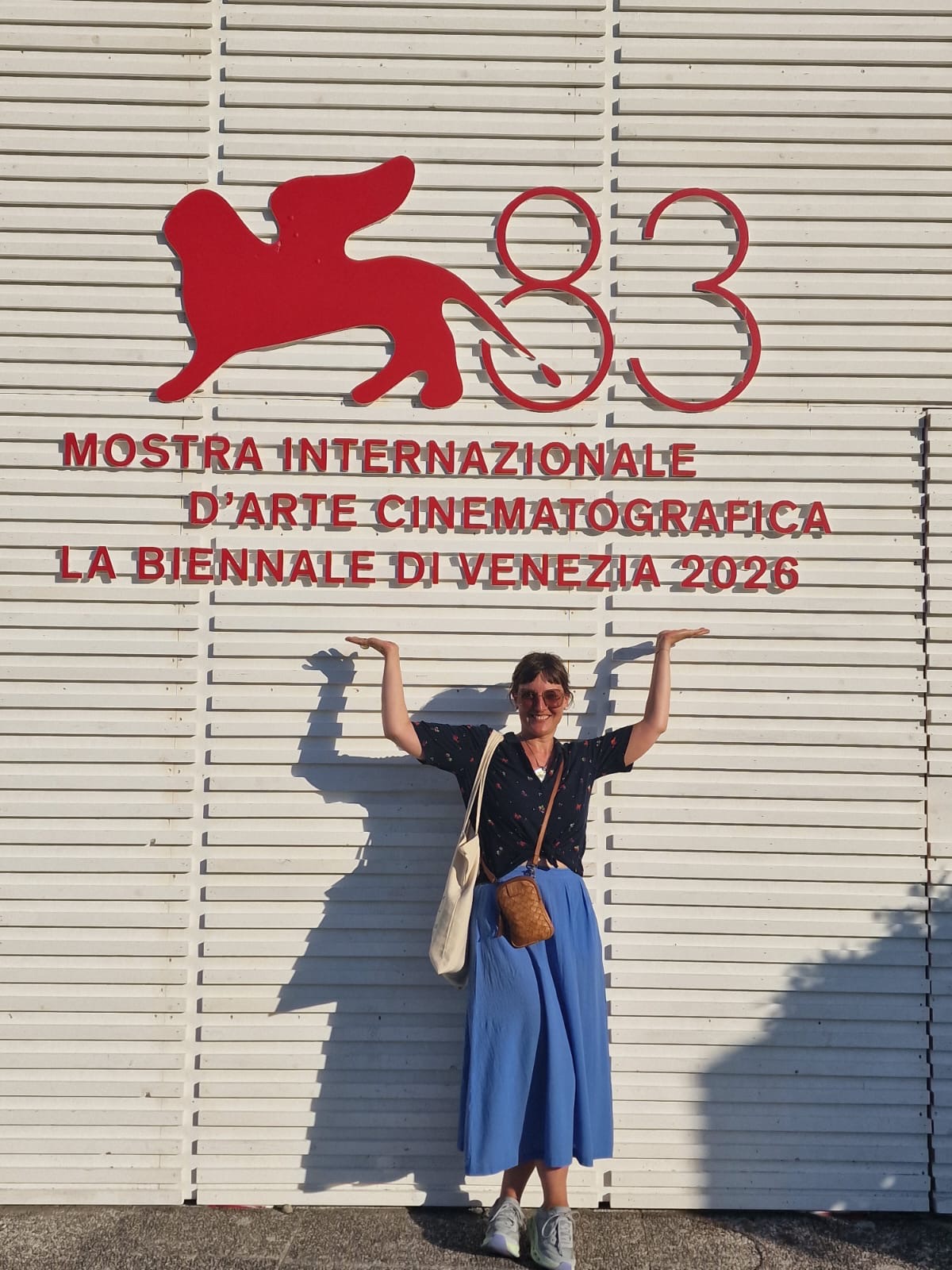
Final day of the Mostra and first big disagreement among the watchers on the films we saw – this is as well an interesting aspect of cinema (and art in general): often something works for you and not for others. Sometimes the explanation for the (dis)liking is easy to find. Other times it is harder. Anyhow, we ended up with opposite views yesterday, my preference going quite clearly for movie number 2 (which was not the case for others).
Given the situation, let me present to you the arguments in favour and against Marco Bechis’ “Return to Buenos Aires” as discussed yesterday. Of course the subject is a gripping one: an Argentinian doctor who fled decades ago to Italy returns to Argentina to testify in the trial of representatives of the military dictatorship. The interesting aspect is that, whilst he was a vistim of torture, he ended up collaborating with his torturers in order to survive. This results in a terrible guilt. The movie has a few very powerful scenes showing this trauma, this I can only agree with.
Now why did it not work for me? I spent a good time thinking about it since yesterday and I believe it is caused by two different things. First, the way it was filmed was too theatrical/artificial for me. The tribunal where the trial is held is for example extremely dark, almost empty with a huge gap between the convicted and the general public. It almost gives you an unrealistic sense of a horror movie and therefore (for me) creates a distance with the story. And this is only one example of many artificially dark (or brown coloured) scenes that I personally found counterproductive. But again, I was the only one to think that (though, reading some reviews today, some in this world seem to agree with me).
Secondly, I did find there were quite many inconsistencies with the story (that, again, were only problematic for me, so happy to discuss with other viewers). The fact that the main character worked as a functional doctor in Italy for decades while he seems to be a total wreck was a bit unrealistic and questionable to me. I don’t understand why Bechis needed to create this 30 years gap between the events and the trial, when it is of common knowledge that the trial took place in 1985 (which would better explain our doctor’s still very fragile mental state according to me). His main tortionnaire (spoiler alert) who returns to threaten him at the trial without any discretion nor fear… also hard to believe for me.
I could continue, but just the fact that all these questions came to my mind while watching already says something and made it impossible for me to embark properly on the trip to Buenos Aires. Again, others travelled without problem so it might just be me.
On the other hand, the more I think about the second movie, the more I come to the conclusion that I liked it very much. It somehow progressively grows into you. And again in this case, we disagreed. My other fellow movie watchers found it so so, too slow and with weaker acting. I did not. And here we go again, we could write an entire essay on how and why something impacts you and not someone else.
The movie provides for a very intimate window into today’s Iran. It tells the story of a doctor who, after helping wounded demonstrators, gets arrested and sees his medical practice shut down. Based on this and the lack of any perspective for the future, he decides to end it there and commit suicide. Too much suffering. The film depicts that day when he decides to wrap it up, handover papers and plants to various family members and announce his decision to end it.
It is a bitter sweet, very discrete, shy and delicate movie. What some of us saw as weaker acting, I saw as chosen and (perfectly appropriate) discretion combined with determination and fatal powerlessness. Basically subtlety. I found it very beautiful and, in contrast with the first evening movie, very true.
This wraps my 2026 Mostra. It was a good one with not too many disastrous movies to suffer through and many enjoyable things to watch. To be noted the surprisingly short average length of the screened official selection movies – around 1h45, I would say. Looking at the press, I would bet on the Israeli “NAZA” to win the Golden Lion – we did not see that one, as it got added to the programme only ten days ago and sold out almost immediately. It seems to be artistically and politically very relevant in any case. As long as John Malkovitch receives the price for the best actor, I have decided not to argue on anything with the Jury. As demonstrated by yesterday’s screenings, a Jury’s decision will always, in the end, be a compromise between very diverging sensitivities.
See you hopefully in 2027, Venezia!


Leave a Reply